

Roth IRA Strategy and 529’s
What has changed?
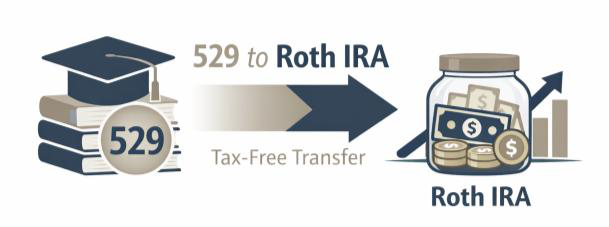
A provision under the SECURE 2.0 legislation has created a new planning opportunity for families who have funded
education savings plans. Beginning in 2024, unused 529 plan assets can be transferred into a Roth IRA for the
beneficiary—without taxes or penalties—when certain conditions are met.
Why This Matters
One of the long-standing concerns with 529 plans has been the risk of overfunding. If education costs come in lower than
expected, excess funds were historically subject to taxes and penalties when withdrawn for non-qualified expenses. This
new rule provides a practical solution by allowing those dollars to be redirected toward long-term retirement savings.
Key Guidelines
• A lifetime maximum of $35,000 can be rolled into a Roth IRA per beneficiary
• Annual Roth contribution limits still apply
• The 529 plan must have been open for at least 15 years
• Contributions made within the last 5 years are not eligible
• The beneficiary must have sufficient earned income to support the contribution
Planning Considerations
This strategy can be particularly effective for younger beneficiaries who are beginning their careers. Moving funds into a
Roth IRA early allows for meaningful tax-free growth over time and can serve as a strong foundation for future retirement
savings. As with most planning strategies, coordination is key. The timing, income requirements, and long-term objectives
should all be evaluated to ensure the approach aligns with your overall financial plan.
Our Perspective
This change adds flexibility to education planning and helps reduce the concern of overfunding a 529 plan. It also reinforces
the importance of viewing financial decisions in a broader context—where education, tax planning, and retirement strategy
work together.
Our Role
• Evaluate whether a 529-to-Roth conversion aligns with your overall financial plan
• Coordinate with your CPA to confirm eligibility requirements and proper tax treatment
• Help structure the timing and amount of conversions within annual contribution limits
• Assist in implementing the strategy in a way that aligns with long-term planning goals
• Help monitor progress toward the lifetime transfer limit and ongoing eligibility

Disclosures
This summary is being provided as a service to you by Patron Partners. In preparing this report, Patron Partners has relied upon information provided
by the account custodian. You should be receiving statements at least quarterly from your custodian. If you are not receiving these statements, or you
need another copy, please call us and we will provide one to you. We encourage you to compare the information on the reports prepared by us
against the information in the statement(s) provided directly from your account custodian and to alert us of any discrepancies. Please remember to
contact Patron Partners if there are any changes in your personal/financial situation or investment objectives for the purpose of
reviewing/evaluating/revising our previous recommendations and/or services. Please also advise us if you would like to impose, add, or to modify any
reasonable restrictions to our investment advisor services. A copy of our current written disclosures statement discussing our advisory service and
fees continues to remain available for your review upon request.
Patron Partners, LLC, ("Patron") is a registered investment adviser with the United States Securities and Exchange Commission. Paton does not make
any representations or warranties as to the accuracy, timeliness, suitability, completeness, or relevance of any information prepared by Patron or any
unaffiliated third party. Patron is neither an attorney nor accountant, and no portion of the presented content should be interpreted as legal,
accounting, or tax advice. All such information is provided solely for convenience purposes only, and all users thereof should be guided accordingly.
